

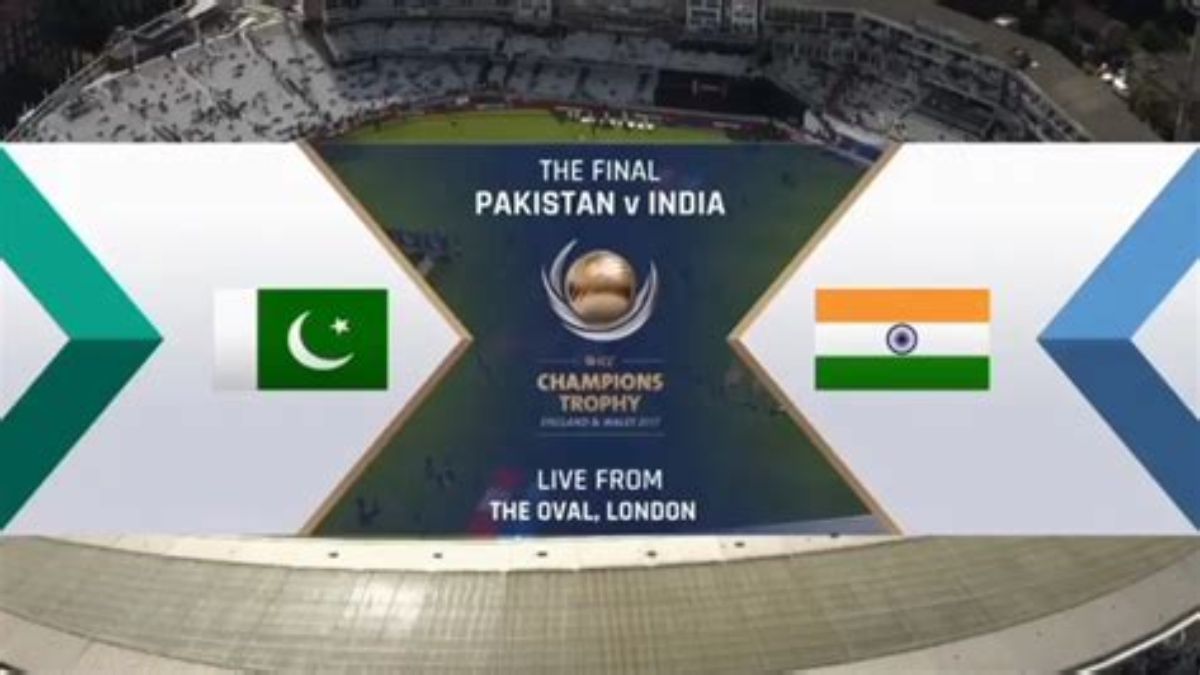
On June 18, 2017, the cricketing world turned its gaze to The Oval in London for a contest of epic proportions. The final of the ICC Champions Trophy featured the fiercest rivalry in the sport: India versus Pakistan. It was a match that promised high drama, intense pressure, and unforgettable moments. What unfolded was a stunning performance that defied expectations, silenced a billion hopeful fans, and crowned an unlikely champion in one of the most memorable one-day internationals in modern history.
The Buildup: A Tale of Two Journeys
India, the defending champions, entered the final as overwhelming favorites. Under the leadership of Virat Kohli, the team had been a model of consistency and power throughout the tournament. Their journey to the final was marked by dominant victories. They had crushed Pakistan in their opening group stage match by 124 runs, comfortably defeated South Africa, and, despite a surprising loss to Sri Lanka, stormed into the semi-finals. There, they systematically dismantled Bangladesh with a nine-wicket victory, looking every bit the polished, well-oiled machine everyone expected them to be. Their batting lineup was a fortress, featuring Shikhar Dhawan, Rohit Sharma, Virat Kohli, Yuvraj Singh, and MS Dhoni. Their bowling, led by the potent pace duo of Bhuvneshwar Kumar and Jasprit Bumrah, was precise and effective.
https://livecricket.live/cricket-world-cup-2026-teams/
In stark contrast, Pakistan’s path to the final was a story of resilience and resurgence. After their humiliating opening loss to India, they were written off by most pundits. Ranked eighth in the tournament, they looked out of their depth. However, under the calm and understated captaincy of Sarfaraz Ahmed, Pakistan orchestrated a remarkable turnaround. They fought back to defeat the world’s number one ranked team, South Africa, in a rain-affected match. They then held their nerve in a virtual quarter-final against Sri Lanka, surviving a tense chase thanks to a gritty partnership between Sarfaraz and Mohammad Amir. Their most impressive performance came in the semi-final, where they shocked the hosts and tournament favorites, England, with a comprehensive eight-wicket win. They arrived at The Oval not as the team that had been thrashed two weeks prior, but as a confident, momentum-fueled unit ready to challenge their arch-rivals.
The Toss and a Fateful Decision
The stage was set, the atmosphere electric. Virat Kohli won the toss and, following the trend of the tournament on a good batting pitch, opted to field first. It was a decision based on logic and India’s strength in chasing down targets. The strategy was clear: restrict Pakistan to a manageable score and let the star-studded batting lineup do the rest. However, what seemed like a sound tactical choice would soon become a decision that would be debated for years to come. Pakistan, given the chance to set a target without the pressure of a chase, was about to unleash a batting performance for the ages.
Pakistan’s openers, Azhar Ali and Fakhar Zaman, walked out to face the music. Zaman, the fearless left-hander who had only made his debut earlier in the tournament, was the embodiment of Pakistan’s newfound aggressive approach. And it was he who would become the central figure of the first innings, but not before a huge slice of luck. On just the third ball of the fourth over, with his score at 3, Zaman edged a Jasprit Bumrah delivery straight to MS Dhoni. The Indian team erupted in celebration, but their joy was cut short. The umpire signaled for a replay, which confirmed that Bumrah had overstepped. It was a no-ball. A single moment of indiscipline had given Pakistan’s most dangerous batsman a new lease on life, a moment that would fundamentally alter the course of the final.
Fakhar Zaman’s Masterclass
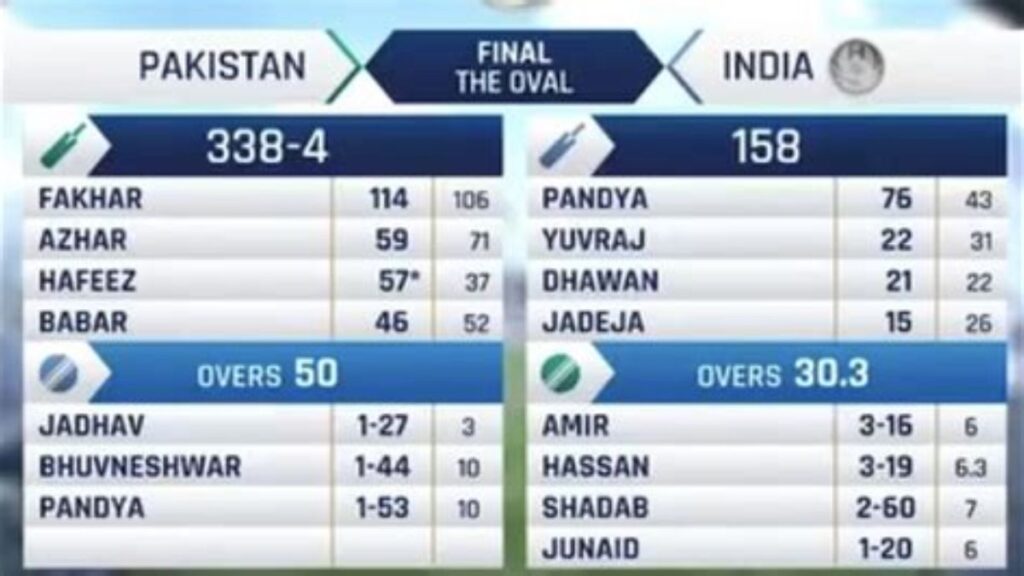
Reprieved and seemingly unshackled, Fakhar Zaman began to play with breathtaking freedom. He shed his initial caution and launched a blistering assault on the Indian bowlers. He targeted the spinners, Ravichandran Ashwin and Ravindra Jadeja, hitting them against the spin and over the top with disdain. His partnership with Azhar Ali laid a solid foundation, adding 128 runs for the first wicket—Pakistan’s first century opening stand against India in an ICC event since 2009. Azhar was eventually run out for a well-made 59, but his dismissal did little to slow the momentum.
Zaman continued his onslaught, bringing up his maiden ODI century off just 92 balls. It was a spectacular innings, a blend of raw power and audacious strokeplay that left the Indian fielders and captain looking bereft of ideas. He eventually fell for 114 off 106 balls, holing out to Ravindra Jadeja off the bowling of Hardik Pandya. But by then, the damage was done. He had not just scored runs; he had psychologically dismantled India’s vaunted bowling attack and set the platform for a massive total. Babar Azam (46) and the experienced Shoaib Malik contributed, but it was a late cameo from Mohammad Hafeez that propelled Pakistan to an imposing score. Hafeez smashed an unbeaten 57 off just 37 balls, ensuring the innings finished with a flourish. Pakistan posted a colossal 338 for 4, their second-highest total against India in ODIs.
The Amir Show: A Spell of Fire
Chasing 339 in a final is a daunting task for any team, but if there was one batting lineup that could achieve it, it was India’s. However, their hopes rested heavily on their top three: Rohit Sharma, Shikhar Dhawan, and Virat Kohli. What they encountered was a spell of left-arm fast bowling from Mohammad Amir that was simply unplayable.
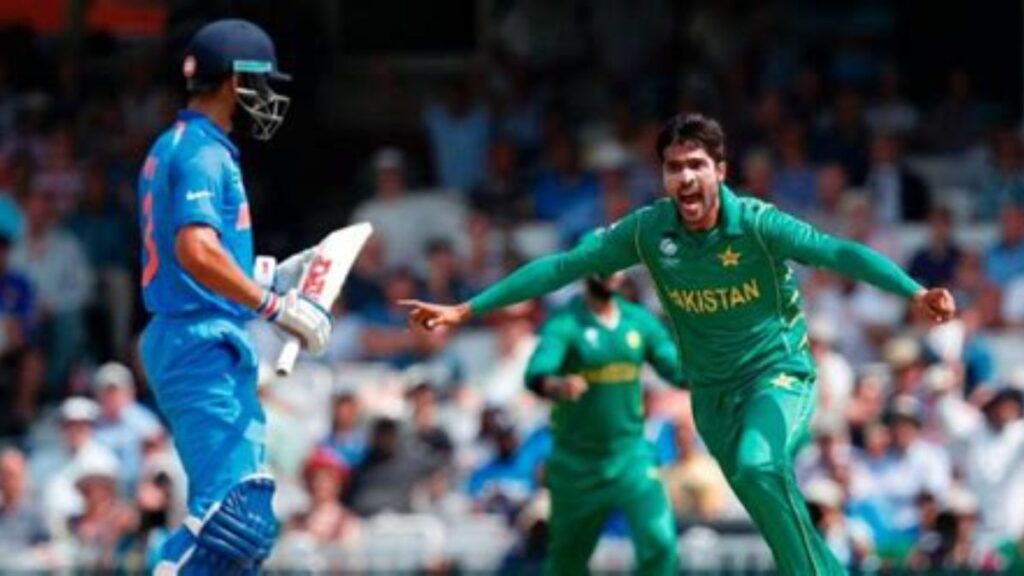
Returning to the team after missing the semi-final with a back spasm, Amir was on a mission. In the very first over, he produced a sensational in-swinger that trapped Rohit Sharma plumb in front for a duck. The pressure was immediately on. In his next over, he produced the defining moment of the match. He got Virat Kohli, the world’s best chaser, to edge one to Azhar Ali at first slip, who dropped a straightforward chance. It felt like a repeat of the Zaman no-ball, a moment that could let India back into the game. But Amir was relentless. On the very next ball, he delivered another perfect outswinger. Kohli, attempting to flick it to the leg side, got a leading edge that flew to Shadab Khan at point. The champion batsman was gone for 5. The Oval fell into a stunned silence, while Pakistani supporters erupted in delirium.
Amir wasn’t done. He then removed the tournament’s leading run-scorer, Shikhar Dhawan, who edged a rising delivery to Sarfaraz for 21. In the space of a few overs, India had been reduced to 33 for 3. Their celebrated top order had been blown away. Mohammad Amir’s opening spell of 6-2-16-3 was one of the greatest in the history of ODI finals, a masterclass of swing, seam, and pure aggression.
https://livecricket.live/cricket-world-cup-2026-teams/
The Collapse and Pakistan’s Triumph
With the top order gone, the responsibility fell on the experienced shoulders of Yuvraj Singh and MS Dhoni. They tried to mount a recovery, but the young leg-spinner Shadab Khan struck, trapping Yuvraj LBW. A review showed the ball was just clipping the stumps, and the veteran had to depart. Dhoni soon followed, pulling a short ball from Hasan Ali straight to Imad Wasim on the deep square leg boundary.
At 72 for 6, the match was all but over. Hardik Pandya provided a flicker of hope with a stunning counter-attack, smashing 76 off just 43 balls, including three consecutive sixes off Shadab Khan. For a brief period, he made the impossible seem plausible. His blitzkrieg was the fastest half-century in an ICC event final. But his lone charge ended in bizarre fashion, run out after a mix-up with Ravindra Jadeja, leaving him furious and India’s last hope extinguished. The tailenders offered little resistance, and Hasan Ali, the tournament’s leading wicket-taker, fittingly took the final wicket. India was bowled out for 158.
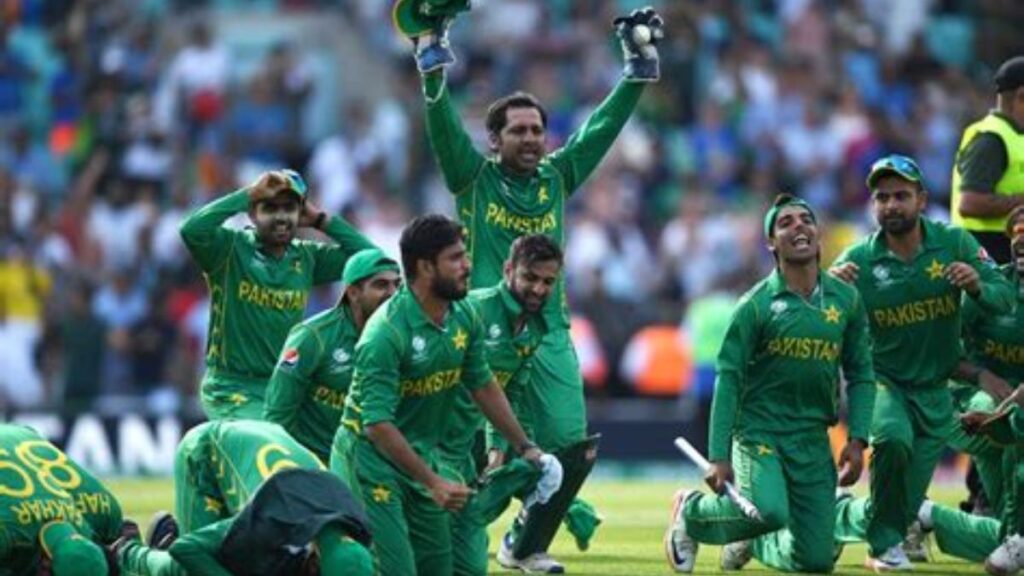
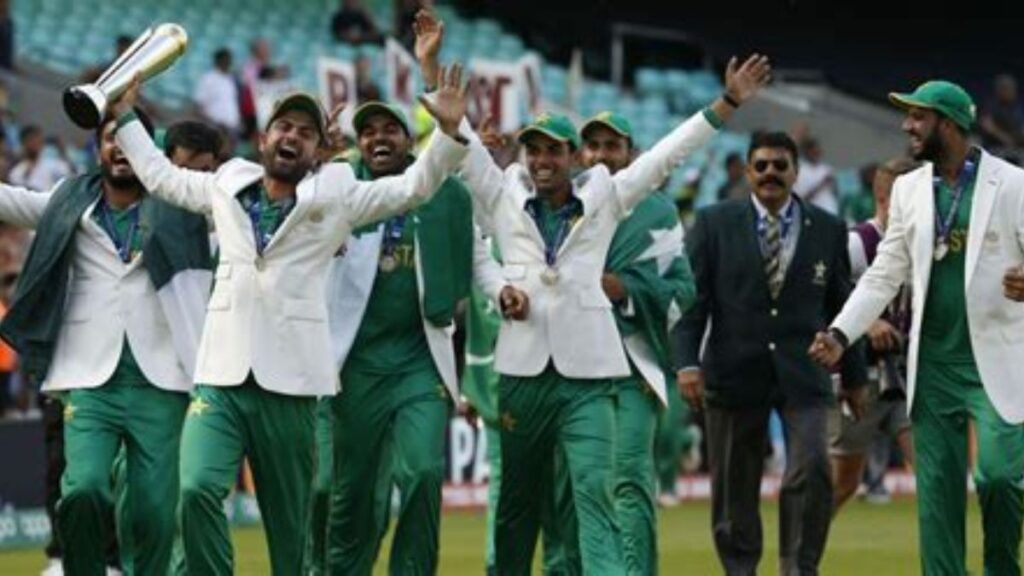
Pakistan had won by a staggering margin of 180 runs. The underdogs had not just won; they had annihilated the champions. As the final wicket fell, the Pakistani players sank to their knees in prayer and celebration. They had defied the odds, silenced their critics, and claimed their first Champions Trophy title in spectacular fashion. It was a victory built on fearless cricket, unwavering self-belief, and a handful of match-winning performances that will be etched in cricketing folklore forever. For India, it was a humbling defeat, a stark reminder that in a high-stakes final, reputations count for nothing. The 2017 Champions Trophy Final will always be remembered as the day Pakistan’s “unpredictables” played the perfect game.
✅ FAQs – 2017 Champions Trophy Final
1. 2017 Champions Trophy Final kab khela gaya tha?
Final 18 June 2017 ko The Oval, London mein khela gaya tha.
2. Final kis team ke darmiyan tha?
Ye match Pakistan aur India ke darmiyan tha.
3. 2017 Champions Trophy kis team ne jeeti?
Pakistan ne final jeet kar 2017 ICC Champions Trophy apne naam ki.
4. Final match ka Player of the Match kaun tha?
Fakhar Zaman ko unki shandar century (114 runs) par Player of the Match ka award mila.
5. Pakistan ka total score kya tha?
Pakistan ne 50 overs mein 338 runs banaye, 4 wickets ke nuksaan par.
6. India ka score kya tha?
India ki poori team 158 runs par all out ho gayi thi, aur Pakistan ne match 180 runs se jeeta.
7. Kya ye Pakistan ka pehla Champions Trophy title tha?
Jee haan, 2017 Pakistan ka pehla aur ab tak ka akhri ICC Champions Trophy title hai.
8. Fakhar Zaman ko kaun se chance mila tha early innings mein?
Unhe Jasprit Bumrah ke no-ball par catch out hone ke bawajood zindagi mili, jiska unhone poora faida uthaya.
✅ Conclusion
2017 Champions Trophy Final cricket ki tareekh ka ek yaadgar match tha, jisme Pakistan ne apne rival India ko ek one-sided contest mein haraya. Fakhar Zaman ki century, Mohammad Amir ki devastating bowling, aur overall team performance ne Pakistan ko 180-run ki shandar jeet dilayi. Ye sirf ek title nahi, balkay cricket duniya ko Pakistan ki potential ka aik zabardast paigham tha.