

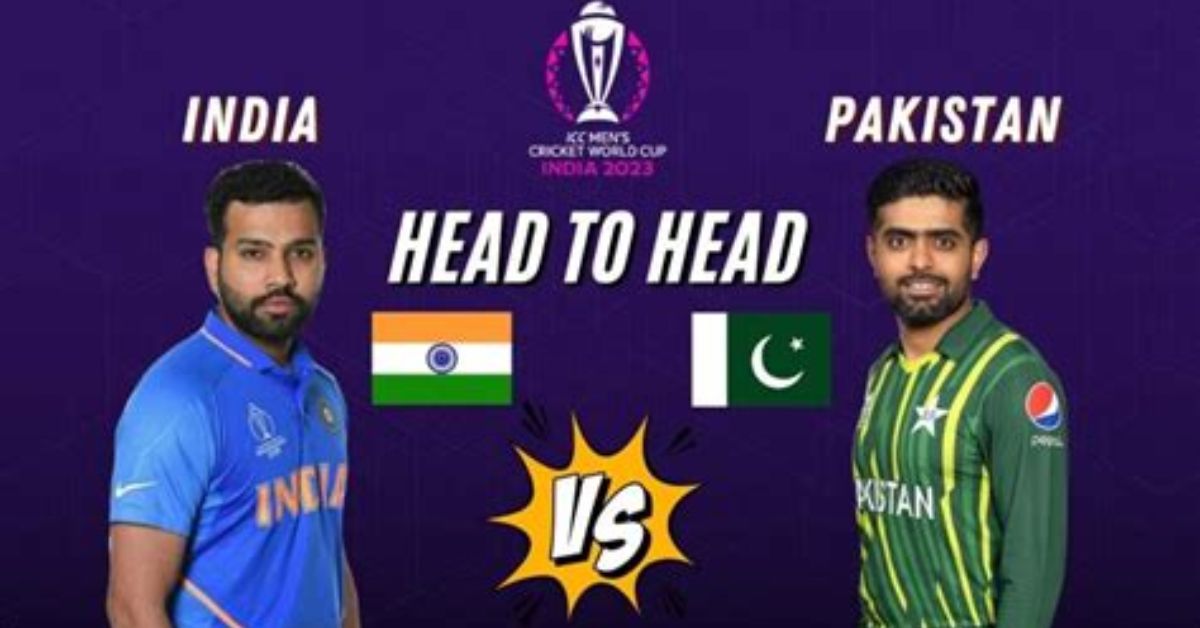
In the lexicon of global rivalries, few carry the weight, history, and raw emotion of “India vs Pakistan.” These three words evoke a universe of meaning that extends far beyond the confines of a sports arena or a political debate. It is a narrative woven from shared history and painful separation, of cultural similarities and stark differences, of diplomatic tensions and the simple, unifying love for a game of cricket. This rivalry is a spectacle that commands the attention of over a billion people, bringing entire nations to a standstill. To truly understand its depth, one must look beyond the immediate contest and explore the intricate layers of history, politics, culture, and sport that define the complex relationship between these two neighboring countries. It is a story of brotherhood and conflict, of moments of breathtaking sportsmanship and episodes of intense animosity. This is the story of India and Pakistan.
The Genesis of a Rivalry: A Shared Past, A Divided Future
The roots of the India-Pakistan relationship are deeply embedded in the soil of the Indian subcontinent, long before the two nations existed as separate entities. For centuries, the people of this land shared a common tapestry of culture, language, and tradition. The Mughal Empire ruled over a vast, diverse population, and the subsequent British Raj further solidified a shared administrative and political experience. However, beneath this veneer of unity, currents of religious and political identity were gaining strength.
The early 20th century saw the rise of nationalist movements seeking independence from British rule. While the Indian National Congress advocated for a unified, secular India, the All-India Muslim League, led by Muhammad Ali Jinnah, argued for a separate nation for the subcontinent’s Muslim population. The demand was rooted in the fear that in a Hindu-majority independent India, the political, economic, and cultural interests of Muslims would be undermined. This “Two-Nation Theory” became the ideological foundation for the creation of Pakistan.
The year 1947 marked the end of nearly 200 years of British rule, but it also witnessed the violent and traumatic Partition of British India. The subcontinent was carved into two independent nations: the secular, Hindu-majority Union of India and the Islamic Republic of Pakistan. The process was anything but smooth. The drawing of the border, known as the Radcliffe Line, cut through provinces like Punjab and Bengal, dissecting villages, families, and communities that had coexisted for generations.
https://perfactai.com/wp-admin/post.php?post=283&action=edit
What followed was one of the largest and most violent mass migrations in human history. An estimated 15 million people were uprooted, with Muslims trekking to Pakistan and Hindus and Sikhs moving to India. The journey was fraught with unimaginable horror. Widespread communal violence erupted, leading to the deaths of an estimated one to two million people. This legacy of bloodshed and loss left deep, indelible scars on the collective psyche of both nations. The very birth of India and Pakistan was thus soaked in mutual trauma, creating a foundation of mistrust and animosity that would define their relationship for decades to come.
The Political Battlefield: From Kashmir to Nuclear Arms
Immediately following Partition, the political relationship between India and Pakistan was dominated by a series of conflicts and disputes, the most enduring of which is the issue of Jammu and Kashmir. As a princely state with a Muslim-majority population ruled by a Hindu monarch, Hari Singh, Kashmir had the choice to accede to either India or Pakistan. Initially, the Maharaja opted for independence. However, an invasion by Pashtun tribesmen from Pakistan in October 1947 prompted him to sign the Instrument of Accession to India in exchange for military assistance.
This act triggered the first Indo-Pakistani War of 1947-48. The war ended with a UN-mediated ceasefire, leaving Kashmir divided by the Line of Control (LoC). India was left in control of roughly two-thirds of the territory, including the Kashmir Valley, Jammu, and Ladakh, while Pakistan administered the remaining third, known as Azad Kashmir and Gilgit-Baltistan. Since then, Kashmir has been the principal point of contention, leading to two more major wars in 1965 and 1999.
The 1965 war was another large-scale military conflict over Kashmir that ended in a stalemate, with both sides claiming victory. The subsequent Tashkent Declaration, mediated by the Soviet Union, aimed to restore peaceful relations, but the underlying tensions remained unresolved.
https://perfactai.com/wp-admin/post.php?post=283&action=edit
The war of 1971 was different. It originated not in Kashmir but in East Pakistan (modern-day Bangladesh). The people of East Pakistan felt politically and culturally marginalized by the dominant West Pakistan. A brutal crackdown by the Pakistani military on the Bengali nationalist movement led to a massive refugee crisis, with millions fleeing into India. India’s intervention in support of the Bengali liberation forces resulted in a decisive victory, leading to the surrender of the Pakistani army and the creation of the independent state of Bangladesh. This event was a significant military and psychological blow to Pakistan.
The late 20th century introduced a terrifying new dimension to the rivalry: nuclear weapons. India conducted its first nuclear test in 1974, describing it as a “peaceful nuclear explosion.” In response, Pakistan accelerated its own clandestine nuclear program. In 1998, India conducted a series of five nuclear tests, and Pakistan followed suit just weeks later, officially establishing both nations as nuclear powers. This development created a precarious strategic balance known as nuclear deterrence, where the threat of mutually assured destruction (MAD) arguably prevents large-scale conventional warfare.
However, it did not stop smaller conflicts. The Kargil War of 1999 saw Pakistani-backed forces infiltrate the Indian side of the LoC in the Kargil district. The ensuing high-altitude conflict resulted in an Indian military victory, but it brought the two nuclear-armed neighbors perilously close to a full-scale war. Since then, the relationship has been marked by periods of cautious engagement, peace talks, and trade agreements, often derailed by terrorist attacks on Indian soil that India attributes to Pakistan-based groups.
The Cultural Connection: More Alike Than Different
Despite the political hostility, the cultural fabric of India and Pakistan reveals a story of profound similarity. Before 1947, there was no “Pakistani” or “Indian” culture in the modern sense; there was a shared subcontinental culture. This shared heritage is vividly alive today.
Language: Urdu, the national language of Pakistan, is almost identical to Hindi, one of India’s official languages, in its spoken form. This shared language, often referred to as Hindustani, is the lingua franca of hundreds of millions across both countries. It is the language of Bollywood, the colossal Indian film industry that enjoys a massive, albeit often unofficial, audience in Pakistan.
Cuisine: From the tandoori dishes of Punjab to the rich biryanis tracing their lineage to Mughal kitchens, the culinary traditions of both nations are virtually indistinguishable. A love for spicy curries, fragrant rice, and freshly baked naan breads unites food lovers on both sides of the border.
Music and Arts: The world of music transcends political boundaries. The ghazals of Pakistani legends like Mehdi Hassan and Ghulam Ali are revered in India, while the songs of Indian icons like Lata Mangeshkar and Kishore Kumar have been household staples in Pakistan for generations. More recently, Pakistan’s Coke Studio has become a cultural phenomenon, celebrated in India for its innovative fusion of folk, classical, and contemporary music, often featuring collaborations that feel pan-subcontinental. The intricate artistry of classical Kathak dance and the soul-stirring rhythms of Qawwali music are cherished traditions in both countries, tracing their roots back to a common cultural wellspring.
This cultural overlap creates a curious paradox. While governments engage in diplomatic standoffs, the people connect through film, music, and food. These cultural bridges serve as a constant reminder of a shared identity that politics cannot completely erase.
The Cricket Pitch: The Ultimate Arena of Rivalry
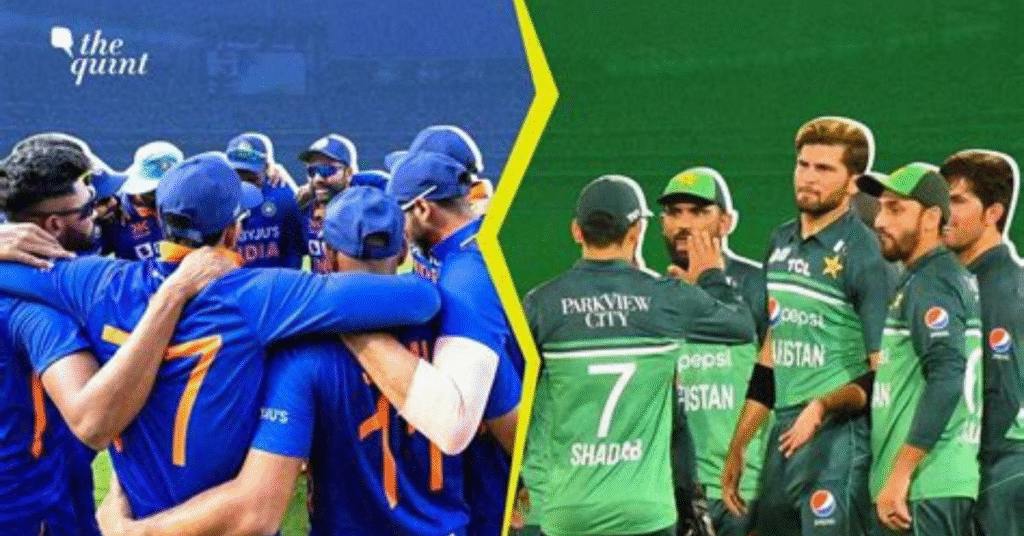
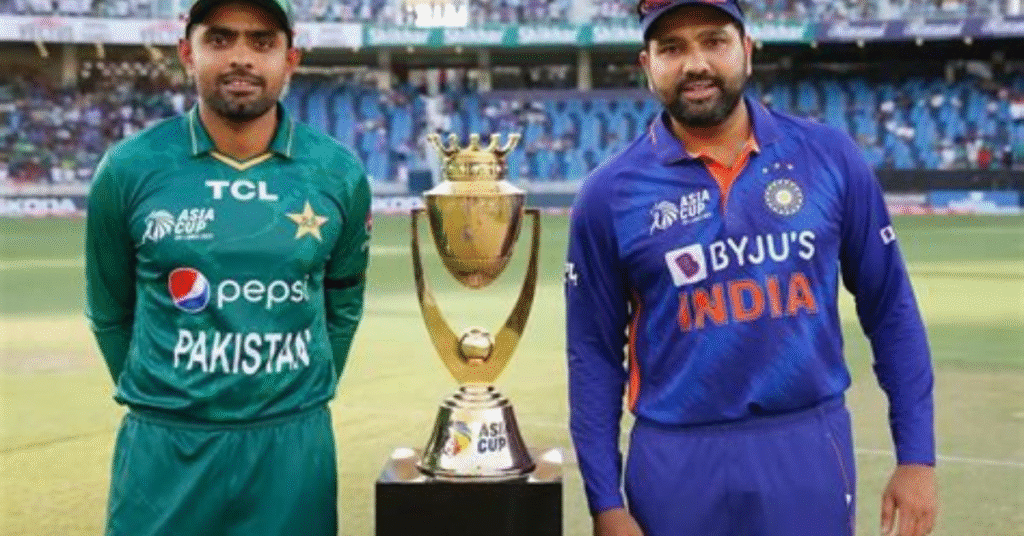
For many, the most visible and passionate manifestation of the India-Pakistan rivalry is on the cricket field. An India-Pakistan cricket match is not just a sporting event; it is a national obsession, a festival of patriotism, and a high-stakes drama that captivates a global audience of over a billion viewers. Streets empty, businesses close, and an entire subcontinent holds its breath.
The rivalry began shortly after Partition, with Pakistan playing its first-ever Test series against India in 1952. From the outset, the matches were imbued with political significance. A victory was seen as a validation of national pride, and a loss was a source of national mourning.
Over the decades, these contests have produced some of cricket’s most iconic moments and legendary heroes. The fierce fast bowling of Pakistan’s Imran Khan, Wasim Akram, and Waqar Younis against the masterful batting of India’s Sunil Gavaskar, Sachin Tendulkar, and Virat Kohli defines the contest. Memorable clashes, like Javed Miandad’s last-ball six in Sharjah in 1986 or Sachin Tendulkar’s epic 98 against Shoaib Akhtar in the 2003 World Cup, are etched into the annals of cricketing history.
The pressure on the players is immense. They are not just athletes but ambassadors and soldiers in whites, carrying the hopes and expectations of millions on their shoulders. The atmosphere in the stadiums is electric, a cauldron of noise, color, and emotion. Yet, amidst the intense rivalry, there have been remarkable moments of sportsmanship and mutual respect. The standing ovation given by the Chennai crowd to the victorious Pakistani team in 1999 is a testament to the fact that a love for the game can sometimes transcend nationalistic fervor.
However, the volatile political relationship has frequently spilled over onto the cricket pitch. Bilateral series between the two countries have been repeatedly suspended for long periods due to political tensions. As a result, India-Pakistan clashes are now largely restricted to multinational tournaments like the ICC World Cup and the Asia Cup. This scarcity has only intensified the anticipation and hype surrounding each encounter, turning every match into a rare and monumental event. In the World Cup, India has maintained a dominant record, adding another layer of psychological edge to the rivalry. For many fans, a victory against the arch-rival is as important, if not more so, than winning the tournament itself.
The Path Forward: A Complex Coexistence
The relationship between India and Pakistan remains one of the world’s most complex and challenging bilateral dynamics. It is a relationship defined by contradictions: shared heritage and violent division, cultural kinship and political enmity, the yearning for peace and the memory of war. The future path is fraught with obstacles. The core issue of Kashmir remains unresolved, cross-border terrorism continues to be a major point of friction, and deep-seated institutional mistrust on both sides complicates any meaningful dialogue.
Yet, there are glimmers of hope. The younger generations, connected by social media and a shared popular culture, often express a desire to move beyond the bitterness of the past. Civil society groups, artists, and activists on both sides continue to work towards building bridges and fostering people-to-people connections. The economic potential of peaceful trade and cooperation is immense, offering a powerful incentive for normalization.
Ultimately, the story of “India vs Pakistan” is not a simple binary of opposition. It is a multifaceted narrative of two nations intrinsically linked by a common history, yet divided by a painful past and an unresolved present. Whether on the diplomatic table or the cricket field, the rivalry is a powerful force that shapes the identity and destiny of over 1.5 billion people. Finding a way to navigate this complex relationship, transforming conflict into coexistence and rivalry ithe Indian subcontinent.nto mutual respect, remains the greatest challenge and the most profound hope for the future of
🏏 India vs Pakistan Match – Frequently Asked Questions (FAQs)
1. When is the next IND vs PAK match scheduled?
The next India vs Pakistan match is scheduled for [insert date]. Please check the official ICC or tournament website for the most accurate schedule.
2. Where will the match be played?
The venue for the upcoming IND vs PAK match is [insert stadium and location]. Match location may vary depending on the tournament or series.
3. Where can I watch the IND vs PAK match live?
You can watch the match live on popular sports networks like Star Sports, PTV Sports, and online platforms such as Hotstar, SonyLIV, or Daraz (region-specific).
4. What time does the match start?
The match typically starts at [insert time] IST (Indian Standard Time) or PST (Pakistan Standard Time). Always double-check the official timing closer to the match day.
5. Who are the key players to watch out for?
Top players often include:
- India: Virat Kohli, Rohit Sharma, Jasprit Bumrah
- Pakistan: Babar Azam, Shaheen Afridi, Mohammad Rizwan
6. What is the head-to-head record between India and Pakistan?
In ICC tournaments, India has historically had an upper hand, while Pakistan has had success in bilateral series and recent encounters. Check latest stats for updates.
7. How intense is the rivalry between India and Pakistan in cricket?
It’s one of the biggest rivalries in world cricket, filled with high emotions, massive viewership, and a deep-rooted cricketing history.
8. Can I buy tickets for the IND vs PAK match?
Yes, tickets are usually available on official ticketing partners or tournament websites. Buy early, as they sell out fast!
9. Will there be live score updates?
Yes, you can follow live score updates on platforms like ESPNcricinfo, Cricbuzz, ICC’s official website, and other sports apps.
10. Is rain expected on the match day?
Weather conditions vary by location. Check the latest forecast 24–48 hours before the match for accurate updates.
✅ Conclusion:
The India vs Pakistan cricket match is more than just a game — it’s a clash of passion, pride, and history. In this FAQ guide, we’ve answered the most common questions fans have about the match, including date, venue, player stats, and how to watch it live. We hope this information helps you stay updated and enjoy the high-voltage action. Remember, it’s not just a rivalry — it’s a celebration of cricket!